
Cognitive training
Mahjong for Seniors: Playing With Weak Hands
Sanospark · · 8 min read
Mahjong for seniors works with three changes: stand the tiles on a rack instead of holding thirteen in one hand, play without bonus tiles or scoring sticks, and keep the table to three players when four is too much. The matching, the turn order and the talk are what the game is for, and none of those need strong hands.
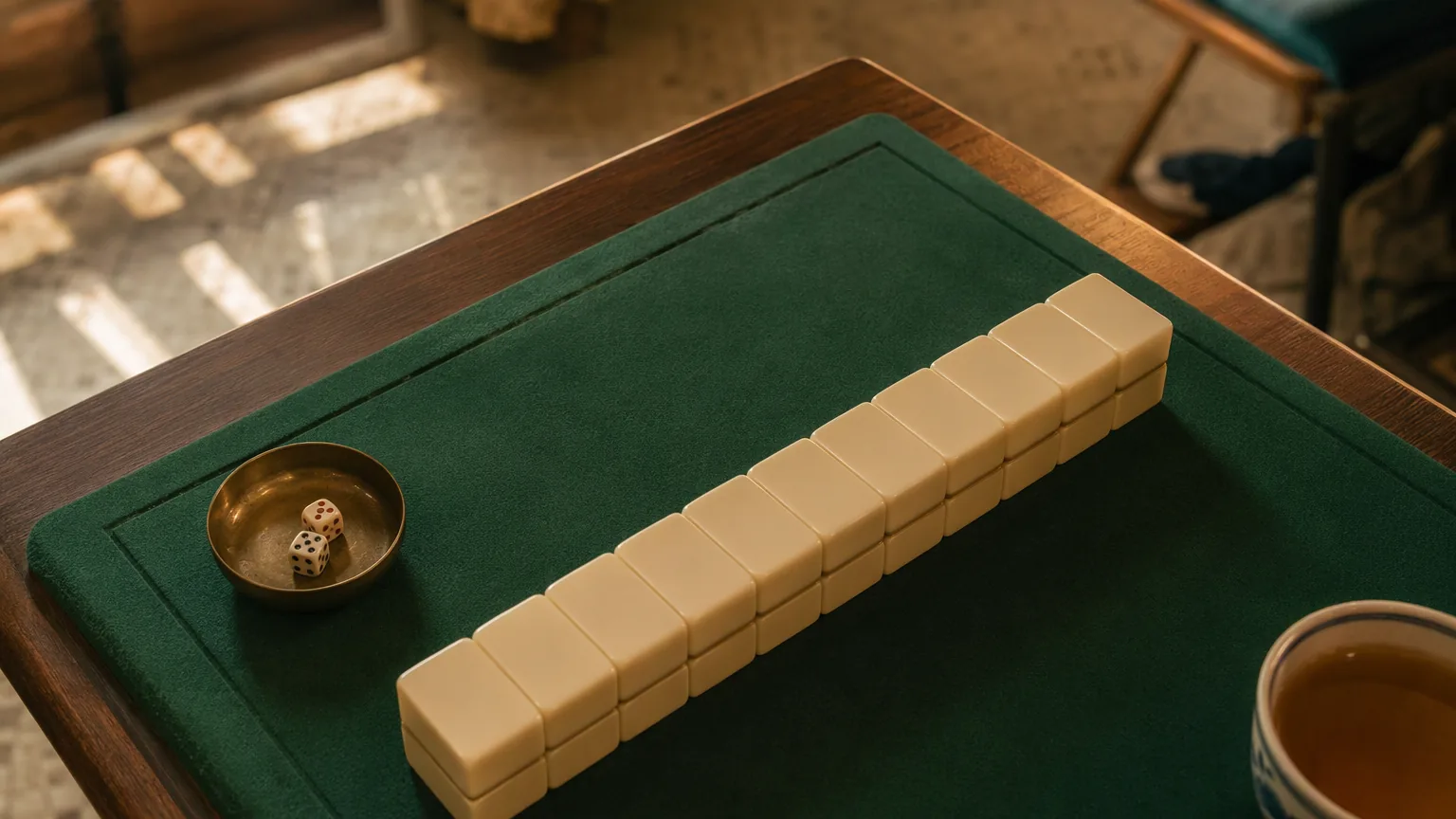
Why the tile game still suits a Hong Kong table
Mahjong is the one table game most older adults in Hong Kong already know. That matters more than any design feature: a game the person has played for fifty years needs no teaching, no confidence building and no explanation of why it is worth doing. The rules are already in the hands.
It also fits the shape of a good session. Four people sit round a table, the turn passes in a fixed order, and the whole thing is visible at once. Nobody has to read a screen, hold a controller or remember a password, and a hand can be abandoned halfway without losing anything.
What has usually changed is not the wish to play but the hands, the eyes and the patience for a four-hour session. Those are practical problems with practical answers, and they are the subject of the rest of this page.
Four ways to make the game playable again
None of these is a lesser version of the game. They are the same game with one demand taken out, and the table decides which one it wants by trying it for a round.
The rule of thumb is to change one thing at a time. If the hands are the problem, fix the hands and leave the rules alone; if the memory of what has been discarded is the problem, play open and leave the hands alone. Changing three things at once makes a familiar game feel strange, which is the opposite of the point.
| Adaptation | What changes | Who it suits | What stays the same |
|---|---|---|---|
| Tile rack | Tiles stand on a wooden rack instead of being held | Stiff hands, weak grip, shaky fingers | The draw, the discard and the win |
| Open hand | Each player's tiles lie face up on the table | Someone who loses track of what they are collecting | The matching and the table talk |
| Three players | One seat left empty, one suit taken out of the wall | A table of three, or a group that tires by the third round | Turn order and the counting |
| Simplified set | No bonus tiles, no scoring sticks, no doubling | A first game, or a mixed table of players and visitors | Everything that makes it mahjong |
| Short rounds | Two rounds, then tea, then a decision about a third | Anyone who finds four hours too long now | The game itself |
Setting up a table that people actually get to
A mahjong table fails on logistics far more often than on ability. The tiles are in a cupboard, the mat is missing, the light is behind somebody, and by the time the fourth player is seated the first one has had enough.
- Keep the set together in one box with the mat, and keep the box where the person can see it. A game that has to be found does not get played.
- Use a proper mat or a felt cloth, because tiles slide and click on bare wood and the noise is tiring.
- Light the table from above or from the side, not from behind the oldest pair of eyes in the room.
- Sit the person with the weakest hands on a corner where the wall is closest, so they are not reaching across the table all evening.
- Agree at the start how many rounds, and stop at that number even if it is going well. The appetite for next week is worth more than the fourth round tonight.
- Put a glass of water within reach and take a standing break between rounds, because the sitting is the part that stiffens.
When hands, eyes or memory make it hard
Stiff hands are the most common reason a player stops, and the least necessary. A rack, a larger set, or simply laying the tiles flat in front of the player instead of building a standing wall solves most of it. If the grip is very weak, magnetic tiles and a tilting board exist, and they are worth the search.
Weak eyes are solved by contrast and distance rather than by willpower. A plain dark mat with pale tiles, a lamp over the table and a larger set make the difference between seeing a discard and guessing at it.
Memory is the one that needs care in how it is handled. If a player cannot remember what has been discarded, playing open removes the demand without removing the game. What should not happen is a running commentary on what they have forgotten, because that turns the table into an examination and the person will find an excuse not to come next week.
Money, and the claim that mahjong protects the brain
Two questions come up whenever mahjong is discussed in a family, and both deserve a straight answer.
The first is money. Playing for counters, matches or a few coins is how the game has always been played socially, and it keeps the table lively. Whether real stakes are acceptable in a family game is a decision for the family and not something this page can settle; what can be said is that the game does not need money to work, and a table that is uncomfortable about stakes plays worse than one that uses counters.
The second is the claim that mahjong prevents dementia, which is typed into search engines often enough that it deserves a plain answer: no table game prevents dementia, and no study has shown that mahjong does. What mahjong reliably gives is a regular social occasion, a reason to concentrate for an hour, and a familiar skill kept in use. That is worth having. It is not protection, and a family that plays because they enjoy it will keep playing longer than one that plays as a treatment.
The wider picture of activity and independence is set out in the WHO fact sheet on ageing and health, which is careful about what activity does and does not do. If the family also wants a scored practice, the six training games in Sanospark keep a weekly record, described on the home page. For the rest of the shelf, board games for seniors covers choosing and adapting table games generally, and memory games for seniors covers the games that need nothing bought. Where the weekly game is organised by siblings in different districts, Easikin is an SI (Superintelligence) · AI (artificial intelligence) caregiving app built around that handover, and Steadicore works on fall-like pattern detection in residential care, which is the other thing to think about when four hours at a table ends in one stand.
Questions families ask about mahjong
These are the five that come up most when a family is trying to restart a weekly game.
- Three players, is that still mahjong? Yes, with one suit removed from the wall and one seat empty. It is the standard way a table keeps going when the fourth player is ill or has moved away.
- Should we let them win? No. Play properly. Mahjong players have been reading the table for decades and will notice a hand that is being handed to them.
- How long should a session be? Two rounds is a good evening. Four rounds is a long afternoon and is usually the point at which the game stops being fun and starts being tiring.
- What if they keep asking whose turn it is? Answer once, calmly, and leave a small marker on the table that shows the direction of play. If it happens every turn, play open with the tiles flat, which removes one demand.
- Is a mahjong app the same thing? No. An app gives practice and a score; it does not give three other people at a table, which is the part that brings the person back next week.
The weekly Sanospark practice
Next week, one exercise you can do straight away
One email a week: a printable five-minute brain exercise and a note for whoever is doing the caring. No app, no phone number.
Just an email address. Stop any time; we never pass it on.
Explore more
- choosing a table game for an older adult — the rest of the shelf, and how to adapt each game
- memory games for a smaller table — eight games that need nothing bought
- the scored practice games in the app — the version that keeps a weekly record
- the rest of the Sanospark blog — activity, movement and family topics side by side