
Cognitive training
Memory Games for Seniors: Eight to Play at Home
Sanospark · · 8 min read
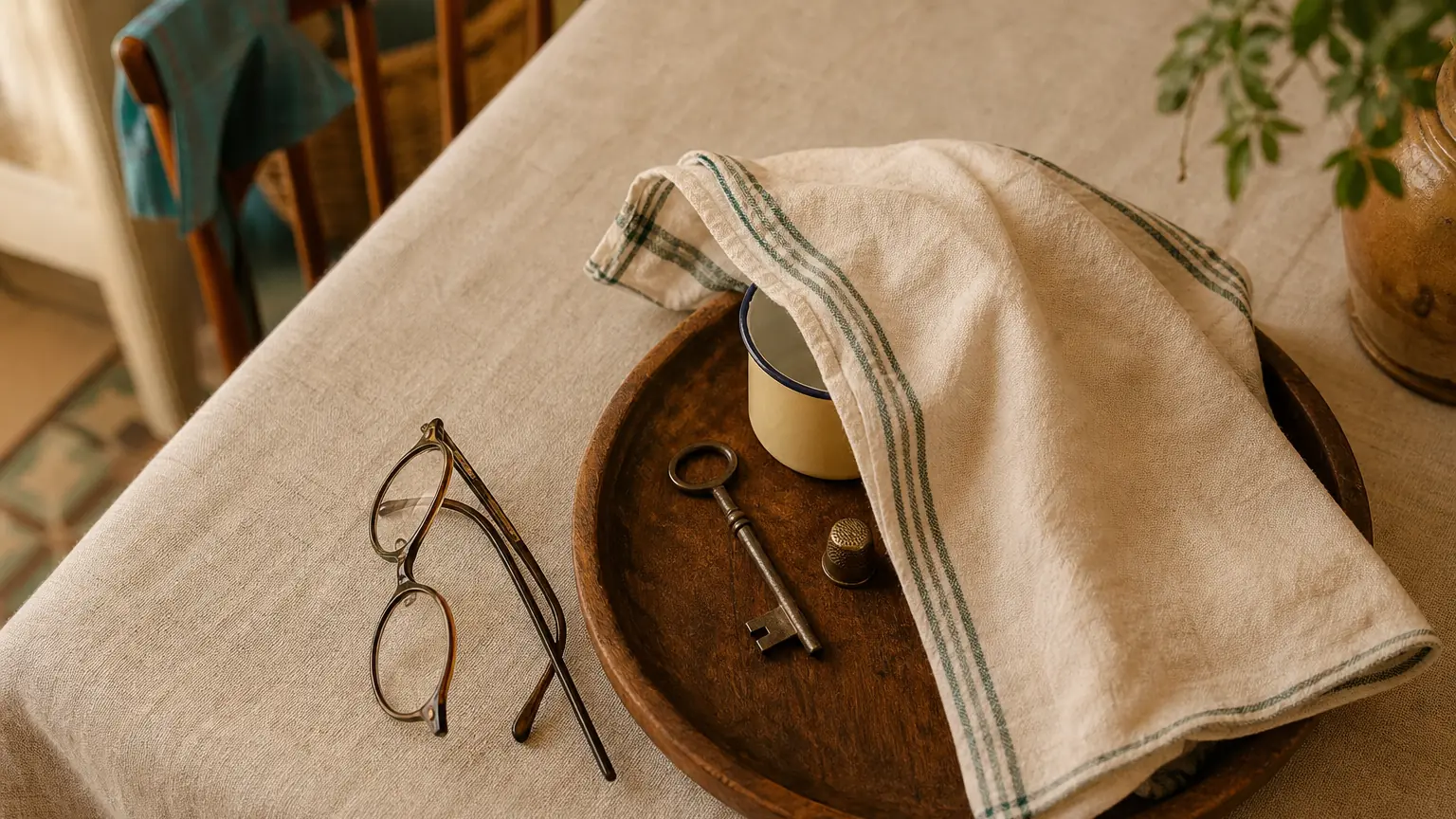
Memory games work best when a round asks for one thing at a time, runs under five minutes, and ends on something the person got right. The tray game is the plainest one: put five familiar objects on a tray, cover them with a cloth, and name them back, using nothing that is not already in the room.
What makes a memory game work for an older adult
A game is only useful if the person will play it again tomorrow, and that depends far less on the game than on how it is set up. Three things decide it: one demand per round, a round short enough to finish while it is still going well, and an ending where something went right.
One demand means the round asks a single question. Name the objects on the tray. Say the colour of the ink. Put the cards back where they were. As soon as a round asks for two things at once — remember this and also sort it by size — you are measuring working memory under load, which is a harder and more tiring task, and a bad first game for someone who is unsure of themselves.
Short matters because fatigue shows up as forgetting, and then the person concludes their memory is worse than it is. Five minutes that ends in success teaches more than fifteen that end in a shrug. The best session is the one that finishes with the person asking to do it again.
The win at the end is not decoration. An older adult who has started to worry about their memory is being asked, every day, to notice what they cannot do. A game that ends with a small, honest success gives them a reason to come back, and coming back is the whole mechanism — the practice only does anything if it happens.
Eight memory games to play at home
None of these needs a purchase. Each one has a dial — the way to make it easier or harder — written after it, because the same game has to work on a good day and a bad one.
- Tray game — put five familiar objects on a tray (a key, a cup, a comb, a spoon, a folded cloth). Name them together, cover with a cloth, then name them back. Dial: fewer objects to make it easier, seven or eight to make it harder, or ask for the objects in the order they were named.
- Where was it — place three objects around the room while the person watches, then ask which object was on the windowsill. Dial: two objects closer together, or ask for the object and the surface it was on.
- Card pairs — a reduced deck of six pairs, face down, two turned at a time. Dial: four pairs, or play as a pair with the family member so nobody is left alone with a miss.
- What is missing — lay out six items from the kitchen drawer, look away, remove one, name what went. Dial: remove the item while they watch the first few times.
- Shopping list — say three items, talk about something else for a minute, then repeat them. Dial: two items, or let them repeat the list straight back before the distraction is added.
- Photo recall — a family photo with four or five people, look for twenty seconds, then name who was standing where. Dial: describe the photo together first, then ask about one detail.
- Step by step — a two-step instruction done out loud ("put the cup on the shelf, then bring me the tea towel"). Dial: one step, given slowly, then two.
- Yesterday, in order — three things that happened yesterday, in the order they happened. Dial: start with one thing and a prompt about the time of day.
How to run a ten-minute session
A session that has a shape is easier to repeat than one that starts wherever. Keep the same order every time, so the person knows what is coming and the only new thing is the content.
- Minute one or two — warm up with something certain. Name the day, the weather, what is on the table. Nothing is being tested; the point is to start with answers that exist.
- Minutes three to six — one memory game, one round, played twice at most. Stop at the second round even if it went well; the appetite for tomorrow is worth more than the third round today.
- Minutes seven to nine — a second, different game from a different family (a tray game after a card game), so the session is not one repeated drill.
- Minute ten — finish by naming one thing that went right, specifically. "You got the key and the spoon, and you got them in order" — not "good job".
When it is too hard, and what to fix first
A round that goes badly is information about the round, not about the person. Before deciding a game is beyond them, change one thing: fewer items, more time, or a prompt that gives the first answer away. Then play it again the same day. If it still does not land, change the game rather than the person.
There is a pattern worth recognising. If the person does well when the room is quiet and falls apart when the television is on, the limit is attention rather than storage, and a shorter, single-demand game will work better than a bigger one. If they recall the tray perfectly but cannot find the word for what they saw, that is a naming problem, not a memory problem, and it should not be drilled.
Anything that looks like a change in a person rather than in a game — forgetting a route they know, repeating the same question within minutes, getting lost in a familiar place — belongs in a conversation with a doctor, not in a training plan. Games are practice, not assessment.
Screen-based memory games: what to check before you buy
A tablet game has two advantages a tray does not: it can adjust difficulty by itself, and it records what happened, so a family can see a direction rather than remember an impression. Both are worth paying for, and both are easy to claim. Check the specifics.
Difficulty should move on its own, up after a good round and down after a poor one, without the person having to choose a level. A game that only gets harder will lose them in a week. Scores should be recorded over weeks, not just shown at the end of a session. The screen should be readable at arm's length with large targets, no countdown pressure on a first attempt, and no advertising. If the person is new to a tablet at all, the device itself is the first thing to teach, not the game.
Sanospark is one of these: six training games on a tablet, an attention-and-speed game before the memory-load game, and a weekly report for the family. It is a practice and engagement tool, and every report it produces says in its own line that it is not medical advice — that line is there because a memory score can frighten a family more than it informs them.
| Check | A good answer | Why it matters |
|---|---|---|
| Difficulty | Moves up after a good round and down after a poor one, with no level menu | A game that only gets harder loses the player in a week |
| History | Scores kept by week rather than shown at the end of a session | One score is an impression, a line is a trend |
| Readability | Large targets, high contrast, legible at arm length | A game that needs reading glasses is a reading test |
| First attempt | No countdown until the person knows the task | A timer on a first go measures nerves, not memory |
| Advertising | None, and no upsell between rounds | An advert in the middle of a round ends the session |
What the practice does, and what it does not
People get better at the game they practise. That part is reliable and worth having: it is a routine that runs, a thing to do together, and a weekly signal a family can actually read.
Whether getting better at the tray game makes anyone better at remembering where they left their keys is a different question, and the honest answer is that the evidence for that kind of transfer is thin. Large reviews of computerised cognitive training find clear gains on the trained tasks and much weaker evidence that those gains carry into everyday life. Anyone selling a memory game should say so.
So play for what the practice reliably gives — the routine, the company, the trend line, a reason to keep going — and keep the claims to that. If the goal is to understand why attention comes before memory, memory training for seniors and attention sets out the order; if the setting is a care home or a group rather than a kitchen table, cognitive stimulation activities is the better fit; and if you are comparing apps rather than games, tablet brain games for older adults lists the criteria first. Movement belongs in the same week as any of this: cognitive and physical training for older adults explains why the two are trained together. Where siblings take turns running the ten minutes, Easikin is an SI (Superintelligence) · AI (artificial intelligence) caregiving app built for that handover, and SilverGuard, the parent company, works on the residential-care side, where a memory group sits inside the weekly programme.
The weekly Sanospark practice
Next week, one exercise you can do straight away
One email a week: a printable five-minute brain exercise and a note for whoever is doing the caring. No app, no phone number.
Just an email address. Stop any time; we never pass it on.
Explore more
- memory training for seniors and attention — why attention is trained before memory
- cognitive stimulation activities — for a group or a care home rather than a kitchen table
- tablet brain games for older adults — the criteria to check before comparing apps
- the six training games — attention and speed first, memory load second
- the rest of the Sanospark blog — activity, movement and care topics in one place