
Cognitive training
Board Games for Seniors: What to Play and Adapt
Sanospark · · 8 min read
Board games for seniors work when there is no screen, no timer, and the game is over inside forty minutes. Pick by what the game asks for rather than by the box: a game of luck and matching suits a mixed table, while a game of planning suits one person who still likes to win.
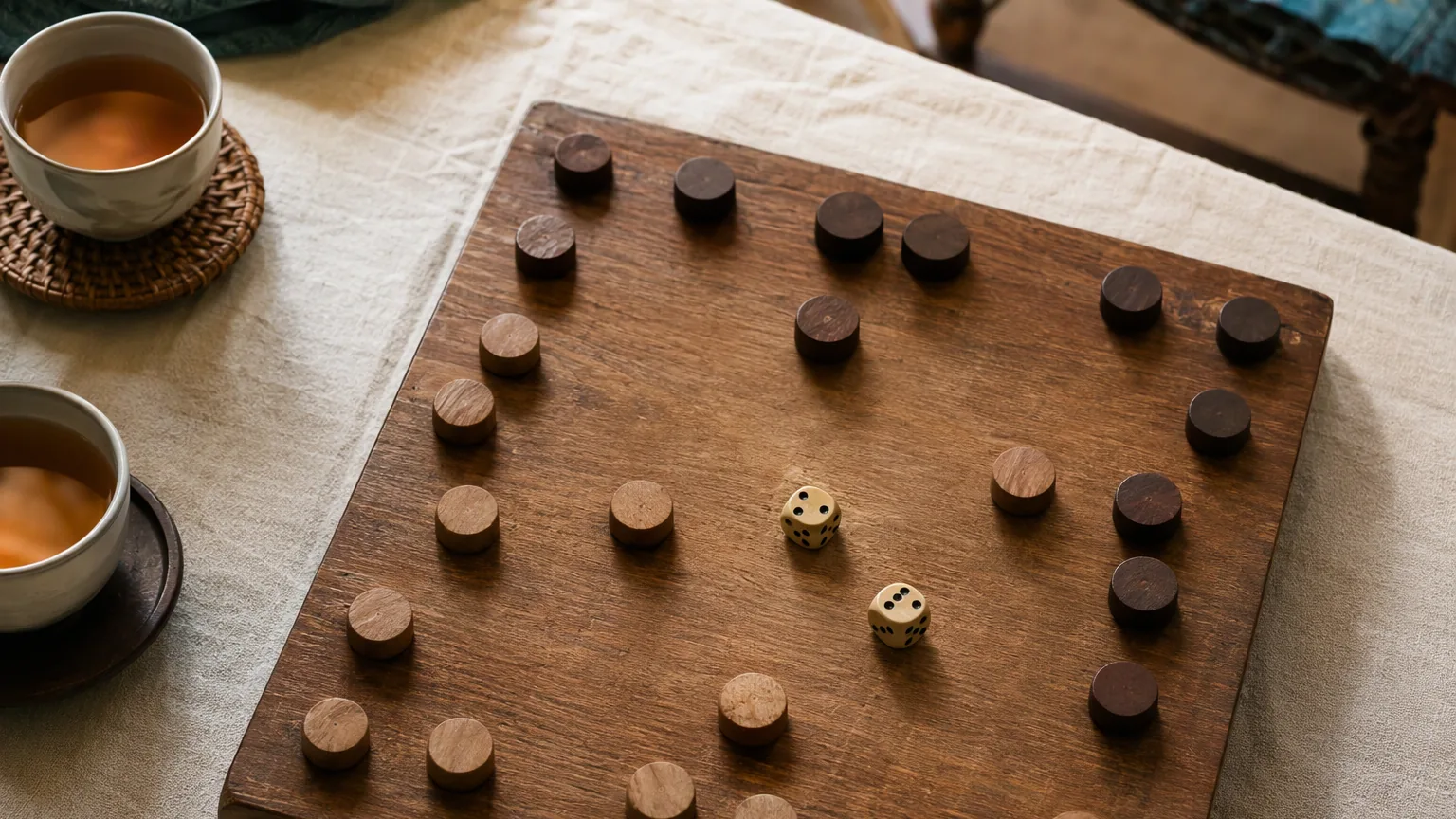
Why a table game still works when a screen does not
A board game keeps everything it needs on the table. The rules are in front of everyone, the pieces can be picked up and put down, and nobody has to remember a password, find an icon or wait for a page to load. For a person who finds a tablet fiddly, that is the difference between an activity and a chore.
It is also social in a way that a solo puzzle is not. Four people round a table are doing the same thing at the same time, and the conversation is about the game rather than about the person, which is often a relief to somebody who is used to being asked how they are feeling.
The last advantage is that a table game can be stopped mid-hand without losing anything. A screen wants a session finished; a board can be left with the pieces where they are and picked up after tea.
Choosing a game by what it asks for, not by the box
The useful question is not whether a game is for seniors, since almost none are, but what it demands of the people playing. Luck, matching, planning, word finding and manual dexterity are separate demands, and a game that leans on one is easier to adapt than a game that leans on three at once.
Read the table with one person in mind. If they tire quickly, choose a game that can end at any point. If their hands are weak, choose large wooden pieces over small cards. If they were the one who always won at this sort of thing, choose the game that still rewards skill, because being given an easy win is its own kind of insult.
| Game | What it asks for | Players | First adaptation |
|---|---|---|---|
| Dominoes | Matching, simple counting | 2 to 4 | Stand the tiles on a rack instead of in the hand |
| Chinese chess | Planning, memory of moves | 2 | Play with a printed move card beside the board |
| Ludo or snakes and ladders | Luck, counting spaces | 2 to 4 | Use a large dice in a shallow tray so it cannot roll away |
| Draughts | Planning, two moves ahead | 2 | Start with fewer pieces on the board |
| Card games such as fish | Matching, holding cards | 2 to 4 | Lay every hand face up on the table |
| Mahjong | Matching, sequence, table talk | 3 or 4 | Play the simplified version with the tiles flat |
Setting the table so the game can actually happen
Most abandoned games are lost before the first turn, in the ten minutes of finding pieces, clearing space and explaining rules to somebody who is already tired. The setup is worth doing properly, and it takes about as long as the first hand.
- Clear the whole table, not half of it. Newspapers, remote controls and medication boxes pull attention away from the board.
- Sit at the corner nearest the light, with the person's back to the window rather than facing it, so the glare is not in their eyes.
- Use a chair with arms at the right height, and a cushion if the table is high. A game played leaning forward for forty minutes is a game played once.
- Put the pieces in one shallow bowl within reach rather than in a pile in the middle.
- Explain one rule at a time, and play the first hand with the rules ignored so the shape of the turn is clear.
- Play one game per sitting. A second game can wait for the next visit, and it will still be there.
When hands, eyes or memory make the game hard
Adapt the game before deciding the person cannot play it. Weak hands are solved by larger pieces, a rack, or laying cards flat; poor sight is solved by more light, a magnifier or a game with high contrast; forgetting the rules is solved by writing the three steps on a card and leaving it on the table, which is what every club does anyway.
What cannot be adapted is a game that requires following several rules at once while holding a hand of cards and remembering what was played. That is a demand stack, not a game, and dropping one layer is usually enough: play open-handed, drop the scoring, or play cooperatively against the board rather than against each other.
There is a point where the honest answer is a different game rather than more adaptation. If every hand ends in confusion about whose turn it is, the game is too complex for the table, and a simpler one will give more of the thing that was wanted, which was an hour that went well.
Table games, the app, and what either of them is doing
A table game and a training app are not competing for the same job. The table game gives company, a shared hour and a reason to sit up; the app gives a repeatable task, a difficulty that moves and a record of what happened. A family usually wants both, on different days.
Neither should be sold as protection. The honest position is that people get better at what they practise, and the evidence that a specific game carries over into everyday thinking is thin. What a regular table game does give is a routine, a conversation and a reason to get out of the chair, and that is worth having on its own terms. The WHO fact sheet on ageing and health sets out the wider picture of activity and independence without promising anything about games.
If the family wants the scored version as well, the six training games in Sanospark run on a tablet, with a weekly report, and they are set out on the home page. For a game that asks for memory and nothing else, memory games for seniors has eight that use what is already in the room. Where the table game is mahjong, mahjong for older players covers the tile game in its own right. And if the forty minutes at the table is the longest the person sits still all day, seated chair exercises for seniors is the other half of the hour. Where several siblings take turns at the table, Easikin is an SI (Superintelligence) · AI (artificial intelligence) caregiving app built for that handover, and SilverGuard, the parent company, works on the residential-care side where a weekly games afternoon is part of a programme.
Questions families ask about board games
These are the five that come up most often when a family is choosing a first game for a parent.
- How many players do we need? Two is enough and three is easier, because one person can then be the scorer and the talker. A four-player game with two reluctant players is worse than a two-player game everyone wanted.
- Should I let them win? No. Play properly and lose sometimes. A game that is obviously being given away stops being worth playing, and the person usually notices before the second hand.
- What about games with money, like mahjong or cards? Playing for matches or counters is normal and keeps the game interesting. Playing for real money changes the mood and is worth avoiding in a family setting.
- Is a jigsaw the same thing? It is a table activity with no rules and no opponent, which suits some people better than a game. It belongs on the same shelf and on the same afternoon.
- Can a board game replace the training games? It replaces the company and the hour, not the record. If a family wants a weekly line to look at, that is what the scored version is for.
The weekly Sanospark practice
Next week, one exercise you can do straight away
One email a week: a printable five-minute brain exercise and a note for whoever is doing the caring. No app, no phone number.
Just an email address. Stop any time; we never pass it on.
Explore more
- playing mahjong when hands are weak — the tile game, adapted in its own right
- memory games that need nothing bought — eight games from what is already in the room
- seated exercise for the rest of the hour — sitting still is the other half of the problem
- the scored training games on a tablet — the version that keeps a record