
Physical training
Hand Exercises for Seniors: Grip, Fingers and Wrist
Sanospark · · 9 min read
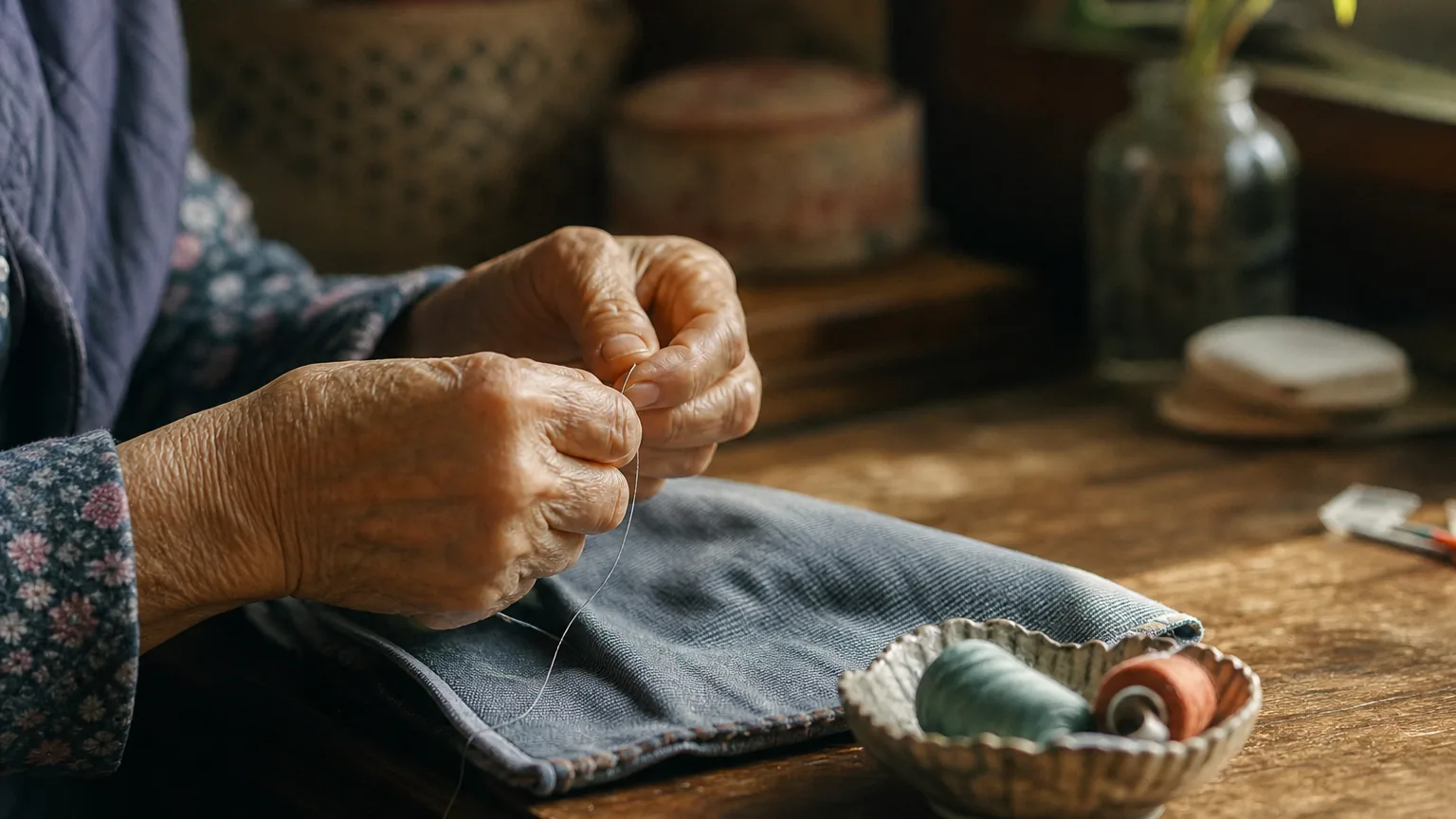
What hand exercises for seniors actually do
Hand exercises for seniors are short, gentle movements that keep the fingers, thumb and wrist working well enough for buttons, chopsticks, jar lids and a tablet screen. They do not rebuild a joint or cure anything. They keep the hand in use, which is what the ordinary jobs of a day depend on.
Two abilities hide under the single word hand, and they behave differently. Grip strength is the closing power of the whole hand, the thing a jar lid or a shopping bag asks for. Fine control is the smaller, slower business of moving one finger while the others hold still, and it is what buttons a shirt, picks up a coin and holds chopsticks. Every movement below is chosen for fine control first.
These movements are not a treatment, they do not repair a joint, and they cannot undo a diagnosis. They are the everyday use a hand needs to stay useful, done deliberately, for five minutes, at a table. The hands are the tool a person uses for almost everything else, so a little lost control costs more than it sounds.
What changes in the hand with age
Several things drift at once. Grip weakens gradually across adulthood, and the speed of a small movement slows, so a person arranges the day around the delay without noticing. Skin and joint capsule lose some elasticity, which shows as morning stiffness that eases as the hand warms. Movement at the base of the thumb is often the first thing to feel awkward, which is why screw tops and keys come up first.
Arthritis changes the picture further. In the hands it can make a joint swollen, tender and painful to move, and over time it can change the shape of the joint. Arthritis UK sets out exercises for the fingers, hands and wrists as part of living with the condition, and the NHS overview of arthritis explains what the condition is and who manages it. Both are worth reading before, rather than instead of, asking a clinician who knows this hand.
Stiffness is at its worst first thing, so the hand usually feels most capable an hour after waking. Timing the set for that hour is the difference between a set that happens and one that is abandoned.
A five-minute set at the table
Sit at a table with both feet flat and the forearms resting on the surface, wrists straight. Nothing else is needed, though a soft ball or a folded cloth gives the squeezing movement something to work against. Move slowly, stay inside a comfortable range, and stop the whole set if any movement produces pain.
- Finger tapping. Rest the palm on the table and lift and lower one finger at a time, thumb to little finger and back, keeping the others still. Slow and deliberate beats fast.
- Thumb to each finger. Touch the thumb tip to the tip of each finger in turn, making a small circle rather than a pinch.
- Tendon glide. Straighten the fingers, then bend only the middle joints, then only the end joints, then make a fist, then open. This keeps the long tendons sliding freely.
- Slow squeeze and release. Close the hand around a soft ball or a folded cloth, press for a slow count of five, then open the hand fully and rest. Two or three rounds is enough at first.
- Wrist turns. With the forearm on the table, turn the palm up and down, and add a gentle side-to-side bend only if it is comfortable. The wrist carries the fingers, so it is worth a minute of its own.
Arthritis, grip and the rule that pain is a stop signal
For a senior who has arthritis these are not a different set of movements, but the same movements with two extra rules. The first is that a joint condition is managed with a clinician, so what is described here is the kind of movement the cited guidance suggests for keeping a hand going, never a substitute for the plan that clinician gave. The second matters most: pain is a stop signal, never a target.
In practice: work in a warm room, warm the hands first, keep every movement inside the range that stays comfortable, and treat a flare-up as a reason to rest and to mention it at the next appointment rather than to push through. Mild effort that settles in a few minutes is fine. Sharp pain, growing swelling, or a joint that locks is not something to work through.
The honest position is also the reassuring one. No number of repetitions cures arthritis, and no movement reverses it. What a short daily set does is keep the hand used, which is worth having on the days that buttons, jar lids and chopsticks matter.
Why hand control sits in a training record
Answer-only records miss half of what a person does. Every game on a tablet also needs the hand: a tap on the right target, a drag held steady, a swipe at the right moment. So the hand sits in the record beside the two things it usually travels with, the speed of a response and the direction of attention. Reaction time and how it changes with age explains the speed line, and the hand is the other end of the same action.
Read as a weekly direction rather than a single score, that is a dated observation a family can carry to a check-up. It is not a diagnosis, and it is why a grip or a tap that has got slower is worth noting rather than worrying about.
Keeping it to five minutes so it happens
The set is short on purpose. Five minutes fits between the kettle and the news, and it is long enough to cover the fingers, the thumb and the wrist. A longer plan is the one that gets postponed, and a postponed set is worth nothing.
Anchor it to something already fixed: the same table, the same chair, the same hour, after the morning drink. Leave the ball or cloth on the table as the reminder, so nothing has to be fetched. Do it with someone else in the room when possible, because a set done together does not get skipped.
If a fortnight goes by with nothing done, cut the set rather than the habit: two movements, three minutes, every day. Encouraging daily practice with an older parent covers that ground in more detail, and the six camera-based training games on a tablet the family may already own give the hand the same short, repeated use, with a weekly report for the family.
Explore more
- the six camera-based training games — hand and finger control, used in the same week
- reaction time and how it changes with age — the speed line that sits beside the hand
- encouraging daily practice with an older parent — how a short set turns into a habit