
Physical training
Chair Exercises for Seniors: A Seated Session That Works
Sanospark · · 9 min read
What chair exercises for seniors are, and who they suit
The simplest answer: chair exercises for seniors are strength, balance and mobility movements done from a seated position, with both feet flat on the floor and the chair taking the weight. They suit anyone who cannot stand for long, tires quickly, or does not feel steady enough to exercise upright, and a set takes a few minutes.
The second group is easy to miss. Someone may be able to stand and still choose not to, because standing has started to feel like a risk, or because a fall left a memory that has nothing to do with leg strength. A seated set gives that person a way back into movement without demanding the thing they are avoiding. Both groups do the same movements; only the starting point differs.
The cited guidance treats this as ordinary activity rather than a special case. The National Institute on Aging pages on exercise and physical activity gather the American guidance into plain articles on the types of exercise and on moving safely with a long-term condition, and the NHS exercise hub sets sitting exercises and balance exercises inside its strength and flexibility section, beside its physical activity guidelines for older adults. A chair is an adaptation of those activities, not a lesser version of them.
What a seated session is actually made of
A whole session can be built from a few movement families. Sit to stand: feet flat, lean forward over the knees, push up, then sit back down under control, using the armrests if needed. Marching: lift one knee at a time as though walking on the spot, with the arms swinging as they would in a walk. Arm raises: lift both arms forward or out to the sides, at a pace the shoulders allow.
Then the smaller joints. Ankle pumps and heel-to-toe rolls keep the lower leg working while the person stays supported, and trunk turns or gentle side bends keep the middle of the body moving. Order matters less than starting, but the usual shape is ankles and knees first, then the bigger movements, then a slow set to finish.
Choosing the chair and setting it up safely
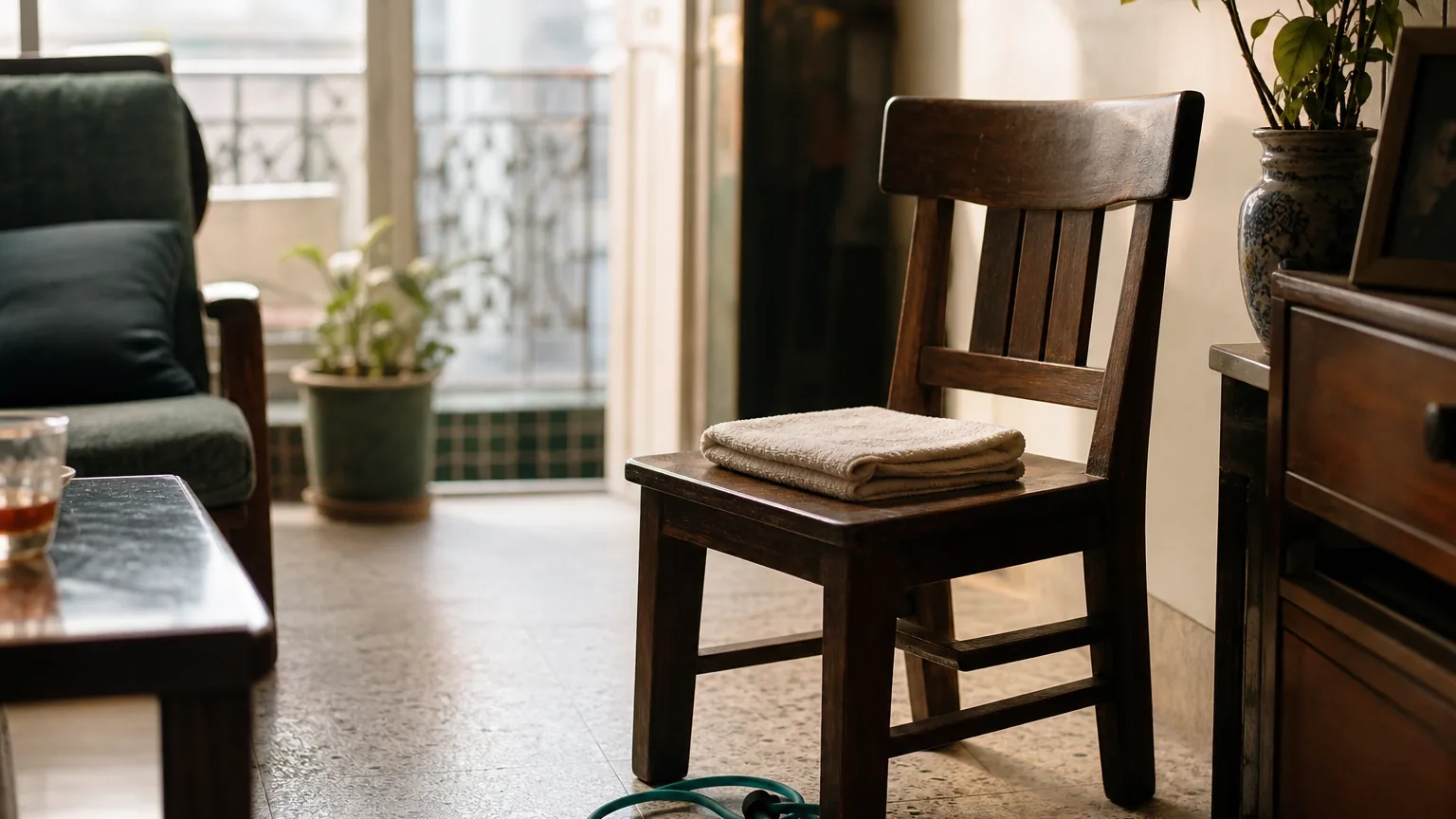
The chair does more work here than most people expect. A firm, upright dining chair with a solid seat and a back is right. A soft sofa or a deep armchair is not, because it makes the sit-to-stand effort harder and the posture worse. Wheels are the one feature to avoid, so a wheeled office chair leaves the room for the session.
Set the chair so the person can sit with both feet flat on the floor and the knees at roughly the height of the hips. Clear the floor around it, including the edge of a rug they will stand on. Keep a stable surface within reach, such as a kitchen counter, and keep the phone close. If a walking frame is in use, park it where the person will finish rather than where they start.
How much and how often
Neither hub prints one weekly number that fits everybody; both put the amount in the guidance they link to. The honest household translation of a weekly target is small and regular: a few short sets on most days, rather than one long session that leaves the person sore and unwilling to repeat it.
Choose the hour when the person is at their best. For many older adults that is mid morning, once the body has woken up and any medication has settled; for others it is after lunch. A first set can be brief and still count. What matters is that it happens again tomorrow, and that the person finishes feeling they could have done a little more.
Stop signals belong to the dose, not outside it. Sharp pain, dizziness, chest tightness or unusual breathlessness means stop, and mention it at the next check-up rather than pressing on. Discomfort that fades once the movement stops is a different thing, and worth describing in the same sentence.
Moving from seated to standing without fear of falling
A fear of falling is common after a fall and after a hospital stay, and it changes what a person is willing to attempt. Seated movement keeps the standing balance demand out of the task, which is what makes it usable on a day when standing feels unsteady. Progress can then be added in small steps that never take the support away all at once.
The usual route is: sit to stand with both hands on the armrests, then with the hands on the knees, then with the arms folded, then pausing upright for a moment before sitting down. Practise beside a counter rather than in the middle of a room. If steadiness changes, involve a clinician or a physiotherapist, who can say what is safe for this person; the cited guidance describes the kinds of activity that suit older adults, and it cannot examine anyone.
Standing work is the direction of travel, not a requirement of the first week. Someone who spends three months on a firm chair doing a good sit-to-stand has done more than someone who tried standing on day one and stopped. For a gentler standing option later, tai chi for seniors gives the slow standing form and the seated alternative.
Adding a thinking task, and turning it into a habit
A seated practice can carry a thinking task at the same time, and this is often the part families enjoy most. Count backwards while marching. Name a fruit with each arm raise. Do the trunk turns while listing the stops on a bus route. The movement keeps the body busy and the thinking task takes the attention off the effort.
Pairing the two is not a trick to make exercise bearable. Cognitive and physical training for older adults sets out why a movement and a thinking task done together reflect the way a day actually works, where a person walks, talks and keeps an eye on a kettle at once.
A habit is built from a fixed chair, a fixed hour and a fixed first movement. Put the session after a meal, before the radio news, or wherever the day already has a seam. Write the short list of movements on a large card beside the chair so nobody has to remember it. The six camera-based training games add one option for the thinking half: they run on a tablet the family may already own, need no extra hardware, and can be played seated. Then set the same chair and the same hour for tomorrow.
Explore more
- the six camera-based training games — a thinking task that can be played seated
- cognitive and physical training for older adults — why a movement and a thinking task belong together
- tai chi for seniors — the standing counterpart when the person is ready